Gas Treatment

Complete Solutions for your Gas Treatment Requirements

OASE® - Gas Treating Excellence – est. 1971

As one of the leading companies in the field of gas treatment worldwide we are the preferred partner for complex new gas plants. BASF´s proven gas treatment technologies boast more than 500 references around the globe, from the deserts of North Africa to the Arctic Circle, including the world´s largest gas treatment units. Under the OASE® brand, BASF provides customized, technologically superior gas treatment technologies for many application fields. Production and storage facilities in the Americas, Europe and Asia ensure very high reliability of delivery and of supply of quality solvents worldwide. Our extensive complementary businesses from  Adsorbent Solutions to  oil-field chemicals can also assist in providing complete solutions for our customers. 

We are proud of over 50 years industrial gas treatment at BASF.

Technologies we offer

The power plant site in Niederaussem, Germany: This is where the joint research program for CO2 scrubbing by BASF, Linde and RWE Power started. CO2 scrubbing is a key technology for carbon capture and storage (CCS). The results achieved are remarkable: significantly reduced energy consumption, high purity of the captured CO2, low detergent consumption and a plant availability of 97 percent.
OASE® blue for Flue Gas and Post Combustion CO2 Capture
From the very beginning, OASE® blue was developed specifically as an optimized large-scale post-combustion capture (PCC) technology. BASF supplies customers with a customized technology package along with highly stable, low-maintenance innovative solvent solutions for specific applications.
Die PolyTHF-Anlage am Verbundstandort Ludwigshafen. BASF, die das hier gefertigte Polytetrahydrofuran unter dem Markennamen PolyTHF® vermarktet, zählt mit Produktionsanlagen auf allen Kontinenten heute zu den global bedeutendsten Anbietern des vielseitigen Zwischenprodukts. Anlagenfahrer Wolfgang Higazi-Deissler (links) und Prozessmanager Armin Beitz-Urban (rechts) unternehmen ihren täglichen Kontrollrundgang durch die Anlage.  PolyTHF® ist ein wichtiges Ausgangsmaterial bei der Herstellung vieler verschiedener Produkte. Beispiele sind elastische Spandex- und Elastan-Fasern für Textilien. Dazu kommen abriebfeste Schläuche und Kabelummantelungen für den Fahrzeugbau. Auch Hersteller hochwertiger Räder für Skateboards und Inline-Skates benötigen dieses Zwischenprodukt.
OASE® purple for Natural Gas   
Utilized in the removal of acid gases such as carbon dioxide (CO2) and hydrogen sulfide (H2S), the OASE® purple technology has proven its versatility and reliability in natural-gas applications.
The hydrogen plant at BASF’s Verbund site in Ludwigshafen is an important supplier of industrial gases. Here two employees conduct an inspection in part of the plant.
OASE® white for Syngas, Ammonia and HYCO
Drawing on over 50 years of experience, the OASE® white technology has proven its versatility and reliability in the removal of acid gases such as carbon dioxide (CO2) and hydrogen sulfide (H2S), from synthesis gas (syngas).
Production facility for the plant protectant Xemium at BASF's Ludwigshafen Verbund site. Xemium® belongs to the chemical class of carboxamides. BASF research teams have thus developed a high-performance active ingredient that helps farmers worldwide to control fungal diseases in various crops. These include for example soybean rust and septoria in cereals. The This highly efficient fungicide ensures consistently high yields for farmers. Plant operator Philipp Krämer during an inspection tour of the plant. He is using a mobile device, which for example generates maintenance messages on site.
OASE® yellow for Selective Treatment 
Developed to enable selective removal of sulfur components from natural gas as well as acid-gas enrichment (AGE) or tail-gas treatment (TGT) units, BASF's OASE® yellow technologies offer a range of solutions that meet our customer's specific project requirements.
There are five spherical tanks in the Friesenheim Island section of BASF’s Verbund site in Ludwigshafen which supply the production facilities with feedstocks. The tanks have a combined total capacity of around 7.5 million liters of liquefied gas. They are used to store butane gas.
OASE® green for Biogas 
The OASE® green technology is primarily targeted for biogas applications. It is characterized by an exceptionally robust performance on gas streams containing oxygen and/or olefins.
Steam cracker II, the largest individual plant at BASF's Ludwigshafen site, covers a surface area of about 64,000 square meters, which is about the size of 13 soccer fields. The steam cracker is also the heart of BASF's Verbund production strategy. This giant plant has been operating since 1981 and uses steam to crack naphtha at about 850°C [1,562°F]. This process leads primarily to ethylene and propylene, both indispensable feedstocks for manufacturing numerous products in Ludwigshafen.
HiPACT®
In partnership with JGC, BASF has developed a unique high-pressure gas treatment technology for high-pressure regeneration to allow for energy-efficient carbon capture and storage (CCS) applications, which is marketed under the HiPACT® brand.
OASE® digilab
OASE® digilab revolutionizes the quality control and improves the efficiency of gas treatment: Together with trinamiX, a BASF Group company, we developed a method to analyze the composition of the gas treating agents in the OASE® processes in near real time.

OASE® and Sustainability

OASE® products make a significant contribution to sustainability in our customer’s value chain, making them high-priority products in the BASF portfolio. Compared to conventional technologies, OASE® offers high efficiency in gas treatment and thus makes important contributions to conserving resources and reducing emissions by saving energy.

BASF has extensive expertise in Responsible Care and Sustainable Development to an extent that is unique in the chemical industry. Our goal is to enhance our customer’s competitiveness by including this comprehensive know – how in our OASE® offering.

Our expertise
  • Emissions, ambient air concentrations, environmental analysis
  • Soil groundwater and protection
  • Wastewater
  • Emergency response and emergency response planning
  • Experimental toxicology and ecology
  • Workplace health and safety

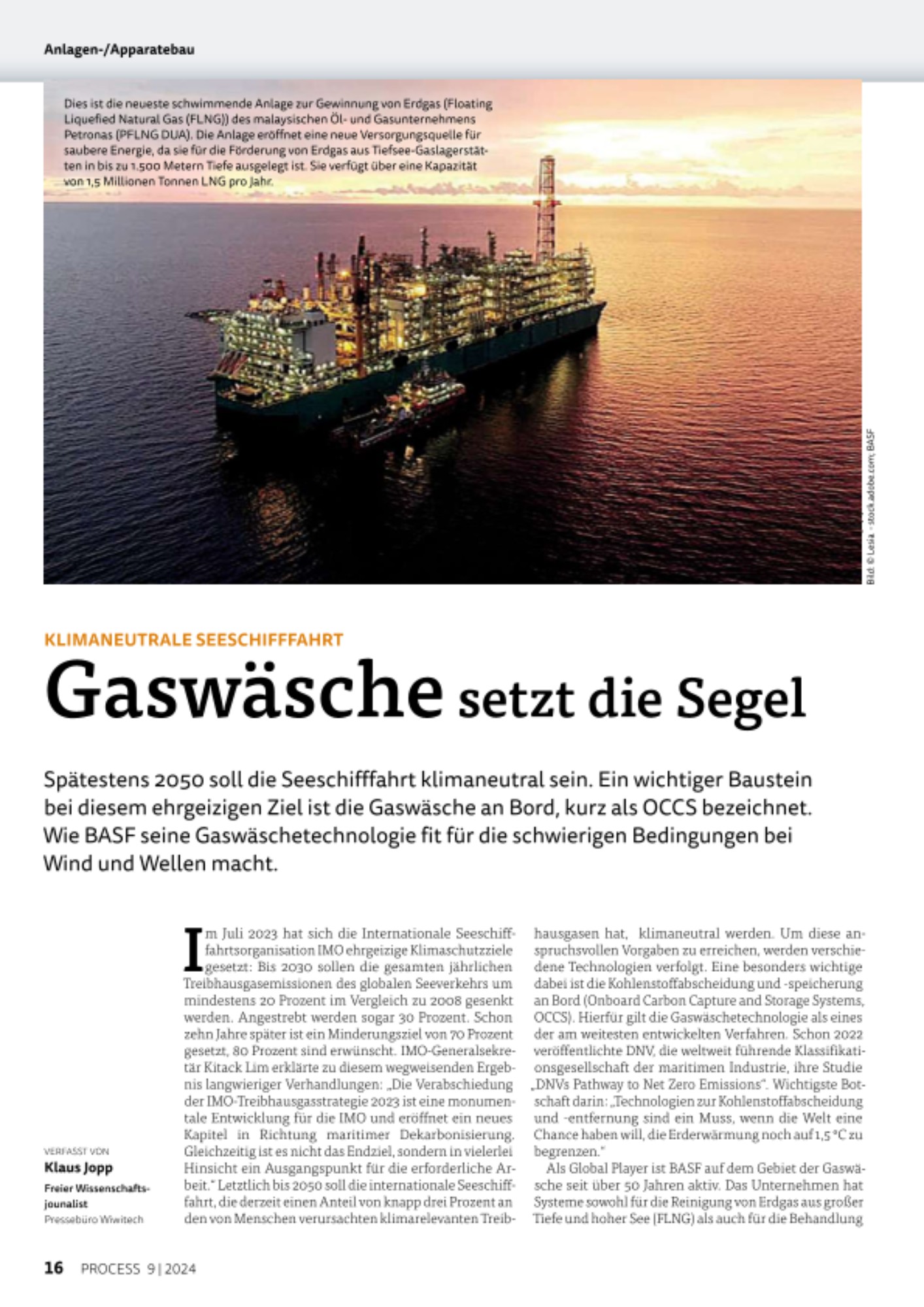
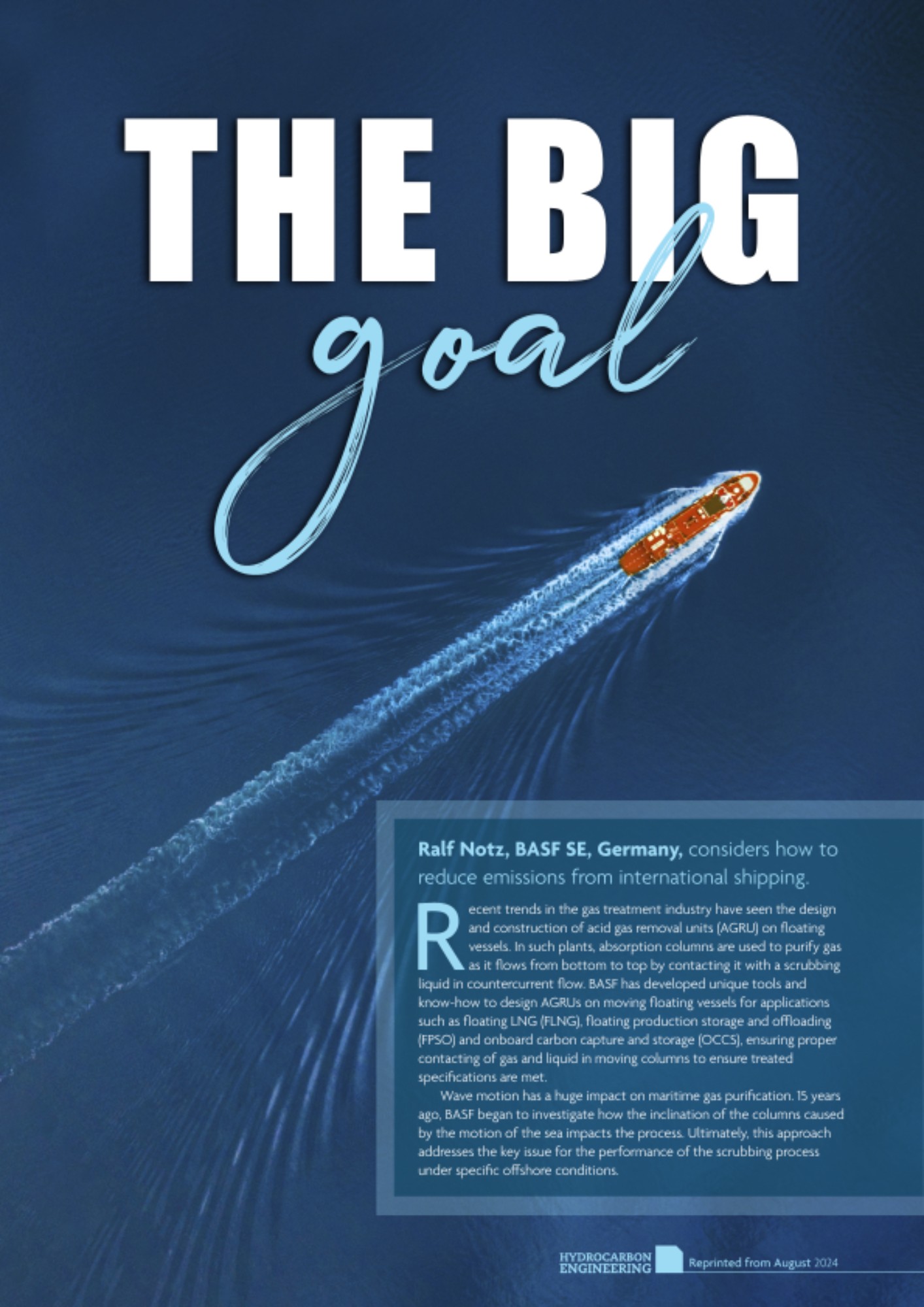
Reducing CO2 in the maritime industry with OASE®

International shipping is to become climate-neutral by 2050. Various technologies are being pursued to achieve this ambitious goal. One of these is carbon capture and storage on board. Gas treatment technology is one of the most advanced processes for separating carbon dioxide from gas streams. In order to remove the carbon dioxide produced from the engine exhaust gases, the most efficient gas treatment possible is essential. BASF has developed solutions for the purification of natural gas from great depths and the high seas (FLNG) as well as for the treatment of exhaust gas streams from power stations or industrial plants.
Follow us on LinkedIn

Media Publications

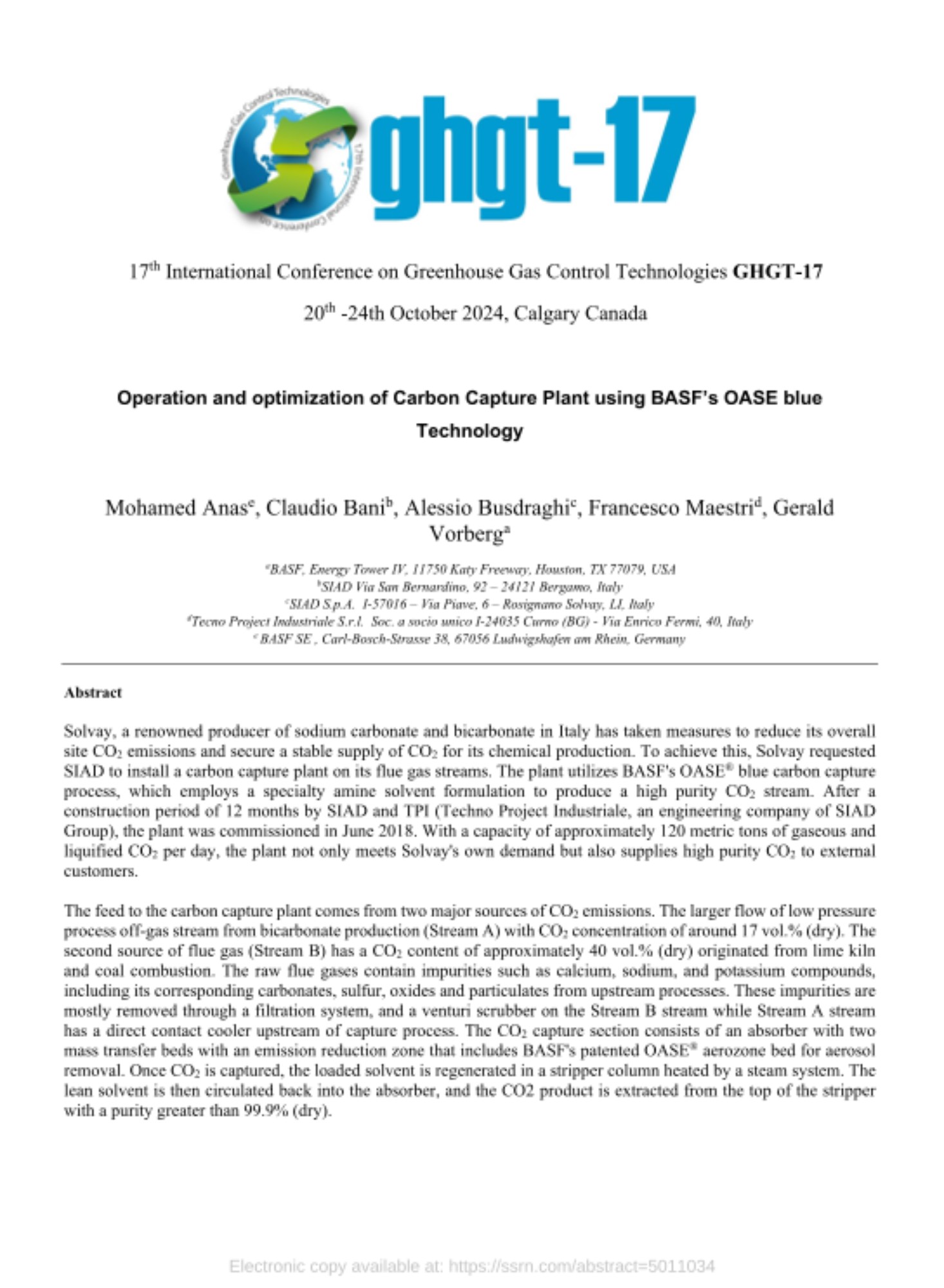
Operation and optimization of Carbon Capture Plant using BASF’s OASE blue Technology (GHGT-17, Nov 2024)

PreviewPDF (955.05 KB)
50 Years of industrial gas treatment

50 Years of industrial gas treatment (Petroleum Technology Quarterly,
Q2 2021)

published by eptq.com
PTQ Q2 2021 issue (digitalrefining.com)
PreviewPDF (1.56 MB)

Taking gas treatment to the next level (LNG Industry, September 2020)

published by BCInsight Ltd
www.bcinsight.com/sulphur.asp
PreviewPDF (7.83 MB)

Super selective hydrogen sulphide removal
(Sulphur Magazine, July/August 2020)

published by BCInsight Ltd
www.bcinsight.com/sulphur.asp
PreviewPDF (347.32 KB)

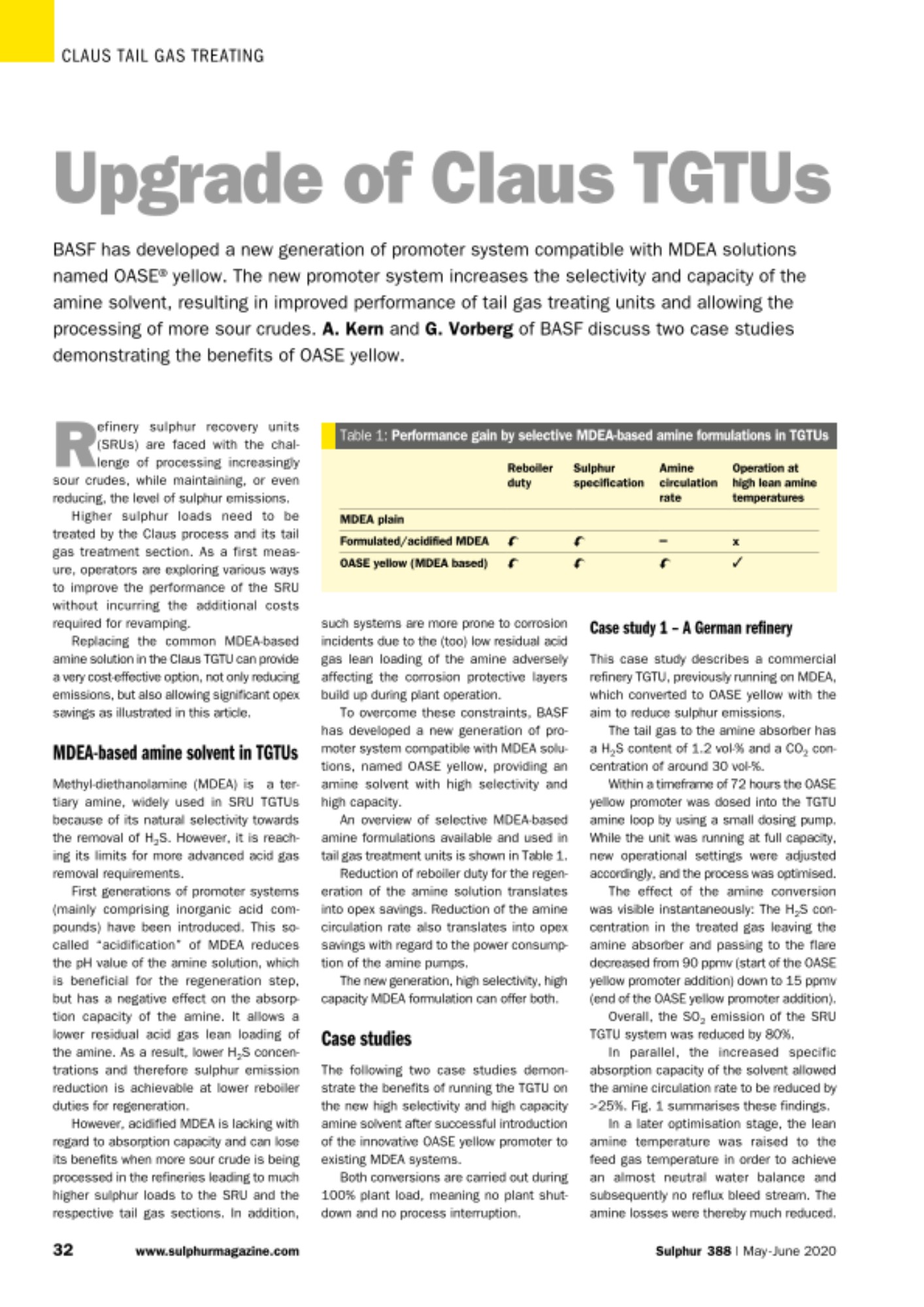
Upgrade of Claus TGTUs 
(Sulphur Magazine,
May/June 2020)

published by BCInsight Ltd
www.bcinsight.com/sulphur.asp
PreviewPDF (271.47 KB)

OASE® is a registered trademark of BASF SE.